AI Should Make Your Team Produce Less
Lesmon·Co-founder & CEO
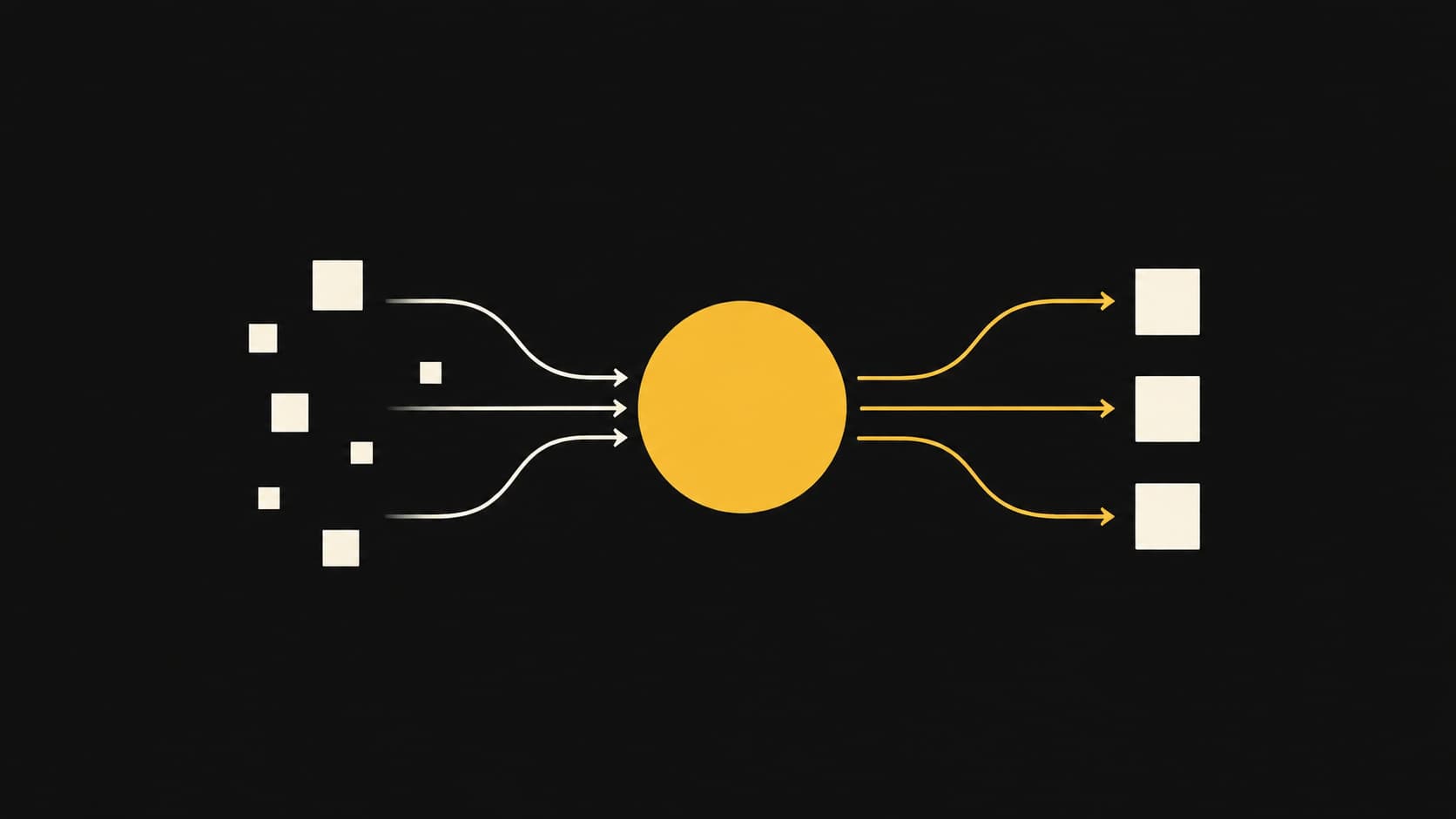


The pitch for AI at work is always the same: do ten times as much. Ship more, draft more, all of it faster. The teams I've watched get worse with AI took that literally, and that was the mistake. The ones who actually came out ahead used it to produce less.
Attention was the bottleneck
Output was never the bottleneck. Attention was. A doc is cheap to generate and expensive to consume, and AI only changed the first half of that. Every AI-drafted brief still has to be read, every AI-built deck still has to be sat through and checked before anyone trusts it. So when a team uses AI to make more, it isn't creating leverage. It's quietly moving the cost from the person who used to write the thing to everyone who now has to deal with it.
None of this is new; AI just made it cheap to forget. Writers have always lived with an asymmetry: the effort you put in gets divided across everyone who reads, so an hour spent cutting a draft is an hour saved for every reader, times however many show up. Pascal apologized for writing a long letter because he hadn't had the time to write a short one, and he was being precise, not modest. Skip the work of tightening and you haven't saved time, you've scattered it, in small irritating pieces, across everyone downstream.
I got fixated on this absurdly early, as the kid who won proofreading at the division press conference in Makati, where the whole job was to take the friction out of someone else's writing so the reader never felt it. AI is the best tool ever built for skipping that step, and skipping it always feels like speed.
You can watch it happen. Someone discovers AI can draft a project update, so now there's a project update for everything, three paragraphs where a line would do. Someone else has it generate a strategy doc nobody asked for. The Slack replies get longer because they're free to write and nobody reads them anyway. Within a quarter the team is producing more than it ever has and getting less done, because all that plausible, well-formatted volume still has to land on a human somewhere, and humans didn't get an upgrade.
Point it at subtraction
The teams that got real leverage pointed it the other way, at subtraction. They used it to turn the long report into five lines so the review meeting could be cancelled. To answer the question in the thread before it became a forty-message thread. To make the thing nobody wanted to read into the thing nobody has to read. The output went down, and the work the team actually had to carry went down with it.
A founder I trade notes with put a hard rule on it: any document over a page gets an AI summary at the top, and the meeting about it can only discuss the summary. Half those meetings stopped happening. Nobody produced anything new. They just stopped making each other consume so much, and the calendar opened up. That's the version of AI productivity that shows up in how the week actually feels.
The test: remove work, or add it?
So the test before you reach for AI on a task is simple: does this remove work from the system, or add to it? Generating a polished artifact that someone now has to read, review, or reconcile is adding, even when it feels productive. Compressing a report so nobody has to wade through it, or answering a question so it never becomes a thread, is removing. Most of the real wins are on the removing side, and most of the usage is on the adding side.
There are places where more output is the actual goal. If you run a content operation and the real constraint is how much you can publish, then multiply away. But most teams aren't constrained by how much they can produce. They're constrained by how much they can absorb, and AI makes it dangerously easy to flood the thing that was already the bottleneck while feeling like you're winning.
The writer's bargain was always to spend the effort so the reader wouldn't have to, and AI made breaking it effortless. So the scoreboard isn't how much more your team produces now. Anyone can produce more; that was never the problem. It's how much nobody else has to deal with.